The Hidden Costs of Outdated Lighting in Commercial Facilities
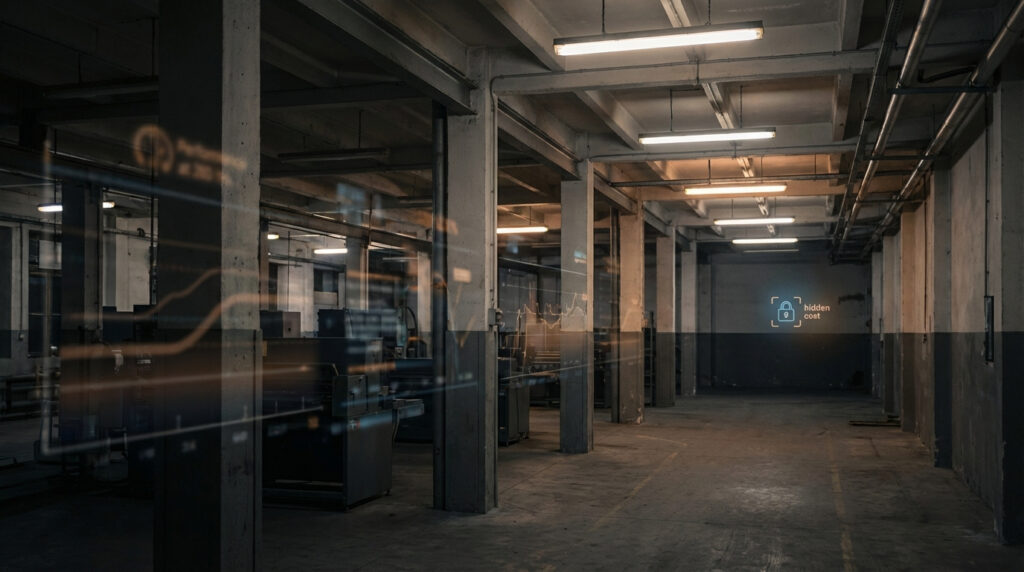
Services About Contact Us Case Studies Lighting the Path Services About Contact Us Case Studies Lighting the Path Get in Touch BLOG The Hidden Costs of Outdated Lighting in Commercial Facilities When facility managers evaluate their operational expenses, lighting often gets overlooked as “just another utility cost.” But outdated lighting systems are silently draining budgets in ways that extend far beyond the monthly electric bill. The Real Cost of Doing Nothing Consider this: that 15-year-old fluorescent system isn’t just consuming excessive energy. It’s creating a cascade of hidden costs that impact your bottom line daily. Maintenance crews spend valuable time replacing ballasts and bulbs. Productivity suffers under flickering, inadequate light. Safety incidents increase in poorly lit areas. And compliance issues lurk around every corner as codes evolve. The SPARk Framework: A Smarter Way to Think About Lighting At LED Connection, we’ve developed the SPARk framework to help organizations understand the true value of modern lighting solutions: Safety: Proper illumination reduces workplace accidents and liability exposure. Modern LED systems provide consistent, high-quality light that enhances visibility and reduces eye strain. Productivity: Studies show that improved lighting can boost worker productivity by 5-15%. Better light quality means fewer errors, faster task completion, and improved employee satisfaction. Asset Sustainability: LED systems last 50,000+ hours compared to 10,000-15,000 for traditional fixtures. That’s years of reduced maintenance, fewer replacements, and lower total cost of ownership. Regulatory Compliance: Energy codes are tightening nationwide. Title 24, IECC, and ASHRAE 90.1 requirements continue to evolve. Modern LED solutions ensure you’re not just compliant today, but prepared for tomorrow’s standards. kWh Performance: Energy savings of 50-70% are typical with LED retrofits. Combined with utility rebates that can offset 20-40% of project costs, the ROI becomes impossible to ignore. From Expense to Advantage The transformation happens when organizations stop viewing lighting as a fixed cost and start seeing it as a strategic asset. A well-designed LED system doesn’t just reduce expenses—it enhances your facility’s performance, protects your people, and demonstrates corporate responsibility. Whether you manage a single warehouse or a portfolio of properties, the question isn’t whether to upgrade. It’s how quickly you can capture the value that’s currently slipping away every time you flip the switch. Ready to quantify what outdated lighting is actually costing your organization? Let’s start with a comprehensive facility audit that reveals the full picture. More lighting reads Services About Contact Us Case Studies Lighting the Path Services About Contact Us Case Studies Lighting the Path (702) 847-7680 bids@ledconnection.com 915 E Dale Ave Suite 110, Henderson, NV 89044 © 2026 LED Connection
Why Turnkey Lighting Projects Fail (And How to Ensure Yours Doesn’t)
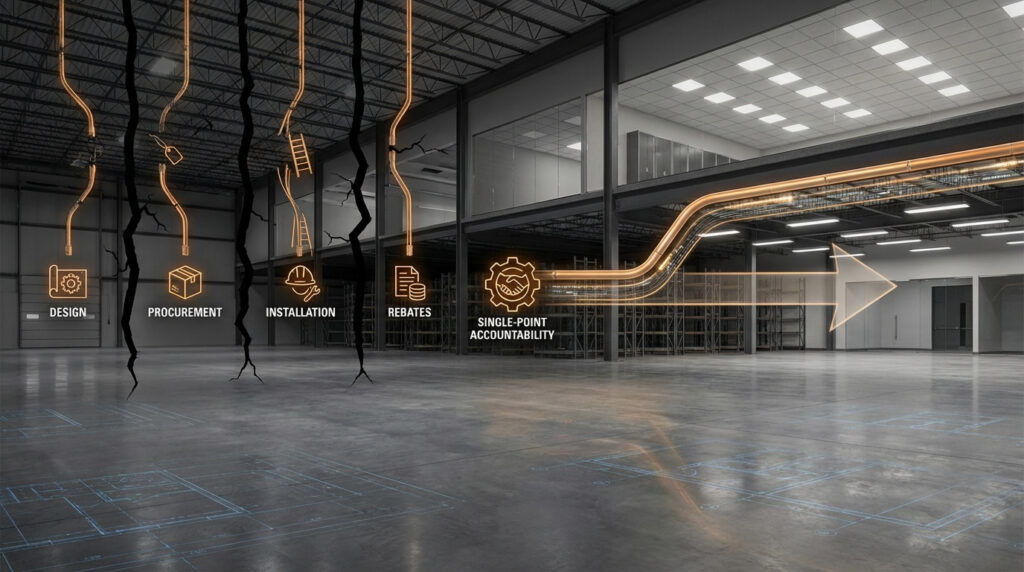
Services About Contact Us Case Studies Lighting the Path Services About Contact Us Case Studies Lighting the Path Get in Touch BLOG Why Turnkey Lighting Projects Fail (And How to Ensure Yours Doesn’t) Lighting retrofit projects should be straightforward: assess the existing system, design the upgrade, install the new fixtures, and capture the energy savings. Yet countless projects end up over budget, behind schedule, or delivering disappointing results. Here’s why—and how to avoid these pitfalls. The Fragmentation Problem Traditional lighting projects involve multiple disconnected parties: the lighting designer creates the plan, a supplier provides the fixtures, a distributor handles logistics, an electrical contractor performs the installation, and someone else manages rebate applications. Each handoff introduces risk. Design specifications get misinterpreted. Products arrive late or damaged. Installation quality varies. Rebate documentation gets misplaced. When problems arise, finger-pointing begins. Nobody owns the complete outcome. The Seven Failure Points 1. Incomplete Discovery: Rushing past the assessment phase means missing critical details—existing electrical capacity, ceiling conditions, operational requirements, or code compliance issues that emerge mid-project. 2. Design-Reality Disconnect: Photometric layouts that look perfect on paper fail to account for real-world factors like ceiling obstructions, HVAC interference, or actual usage patterns. 3. Procurement Delays: Lead times get underestimated. Products arrive incomplete or incorrect. Staging and logistics planning happens as an afterthought rather than part of the project plan. 4. Installation Inconsistency: Quality varies by crew. Project management gaps lead to rework. Coordination with facility operations creates disruption and conflicts. 5. Controls Integration Failure: Smart controls promise optimization but require proper commissioning. Many projects skip this step, leaving systems operating in default modes that miss energy-saving potential. 6. Rebate Capture Breakdown: Missing documentation, late submissions, or incorrect paperwork means leaving money on the table—sometimes 20-40% of project value. 7. Post-Install Abandonment: The contractor finishes, collects payment, and moves on. When issues arise weeks or months later, nobody’s accountable. The White-Glove Alternative Successful projects require single-point accountability from concept through completion. Here’s what that looks like in practice: Comprehensive Discovery: Detailed site assessment that captures not just fixture counts but operational requirements, existing conditions, code compliance needs, and energy baseline data. Integrated Design: Engineering that accounts for photometrics, controls sequences, power requirements, and installation logistics—all validated against real facility conditions. Procurement Excellence: Direct manufacturer relationships ensure quality, competitive pricing, and reliable delivery. Proper staging minimizes facility disruption. Skilled Installation Management: Vetted contractors, clear quality standards, thorough project management, and coordination with facility operations ensure smooth execution. Controls Commissioning: Proper setup, testing, and optimization of smart controls to deliver promised energy savings and operational benefits. Rebate Expertise: Complete management of utility incentive applications, documentation, and follow-through to maximize financial return. Lifecycle Support: Warranty management, ongoing maintenance, and responsive service that extends long after initial installation. The Accountability Difference When one partner owns the entire process, incentives align. There’s no passing blame between parties. Problems get solved proactively rather than reactively. Quality standards remain consistent from design through delivery. More importantly, that partner has a vested interest in your success. Their reputation depends on your facility performing as promised, your energy bills dropping as projected, and your rebates arriving as calculated. Questions to Ask Before committing to your next lighting project, ask potential partners: The answers reveal whether you’re working with a vendor or a true partner. Your facility deserves better than a fragmented, hope-for-the-best approach. It deserves a partner who owns the complete outcome—from initial assessment through long-term performance. More lighting reads Services About Contact Us Case Studies Lighting the Path Services About Contact Us Case Studies Lighting the Path (702) 847-7680 bids@ledconnection.com 915 E Dale Ave Suite 110, Henderson, NV 89044 © 2026 LED Connection
The Future of Lighting is Here: Smart Controls and Beyond
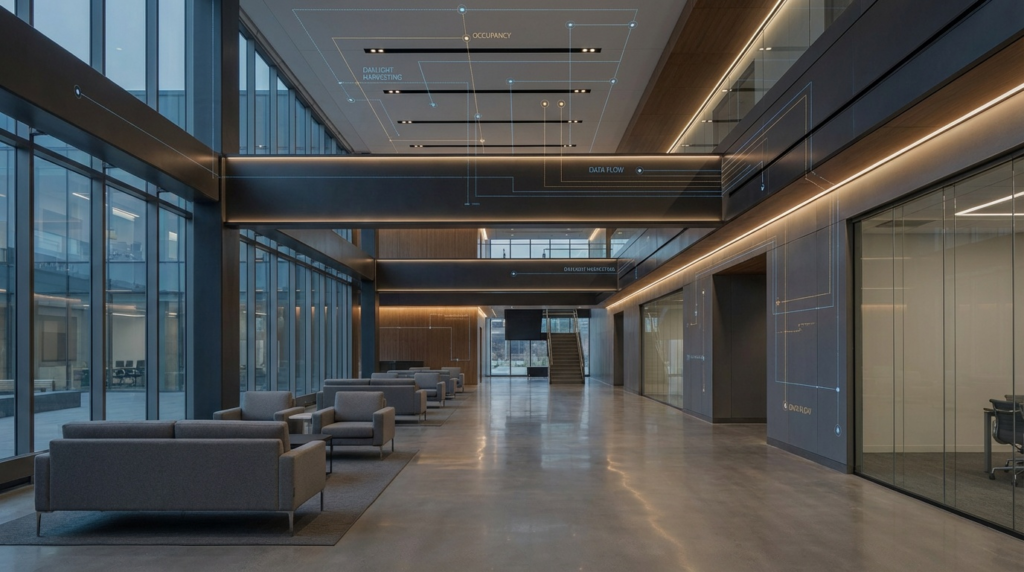
Services About Contact Us Case Studies Lighting the Path Services About Contact Us Case Studies Lighting the Path Get in Touch BLOG The Future of Lighting is Here: Smart Controls and Beyond LED fixtures have become the standard in commercial and industrial facilities. But the real revolution isn’t just about efficient bulbs—it’s about intelligent systems that transform lighting from a passive utility into an active asset that responds, adapts, and optimizes itself. Beyond Energy Efficiency First-generation LED retrofits focused purely on reducing energy consumption by replacing inefficient fixtures with efficient ones. The savings were dramatic—often 50-70% reductions in lighting energy use. But that was just the beginning. Today’s smart lighting systems add layers of value that extend far beyond kilowatt-hour savings. They enable occupancy-based operation, daylight harvesting, task tuning, scheduled dimming, and demand response participation. They provide data on space utilization, maintenance needs, and operational patterns. They integrate with building management systems to optimize overall facility performance. The Controls Revolution Modern lighting controls have evolved from simple timers and photocells to sophisticated networked systems that offer unprecedented flexibility and intelligence: Occupancy Sensing: Spaces light up when occupied and dim or turn off when vacant, eliminating wasted energy in unoccupied areas while maintaining safety and security. Daylight Harvesting: Fixtures near windows automatically dim when natural light is abundant, reducing energy use while maintaining consistent light levels throughout the day. Task Tuning: Different areas receive precisely the light level needed for their specific function—bright task lighting where needed, ambient lighting elsewhere. Scheduling: Automated adjustments align lighting with facility operations, reducing output during off-peak hours or automatically switching to night-setback modes. Demand Response: Integration with utility programs allows facilities to participate in grid stabilization efforts while earning incentive payments. Personal Control: Occupants can adjust lighting in their immediate area for comfort and preference while maintaining overall system efficiency. The Data Advantage Smart lighting systems generate valuable operational intelligence. Occupancy data reveals how spaces are actually used versus how they’re planned. Usage patterns inform decisions about space allocation and scheduling. Maintenance alerts prevent failures rather than reacting to them. Energy consumption tracking identifies optimization opportunities. This data becomes especially valuable across multi-site portfolios, enabling standardization, benchmarking, and continuous improvement at scale. Network Architecture Matters The backbone of smart lighting systems—the network connecting fixtures to controls to management software—determines long-term flexibility and capability. Key considerations include: Wireless vs. Wired: Wireless systems offer installation simplicity and flexibility but require careful network design. Wired systems provide reliability but add complexity. Open vs. Proprietary: Open protocols ensure long-term flexibility and vendor independence. Proprietary systems may offer tighter integration but create vendor lock-in risks. Scalability: Systems should accommodate facility growth and future capability additions without requiring complete replacement. Integration: The best systems integrate seamlessly with building management platforms, creating unified facility intelligence. Implementation Strategy Deploying smart controls requires more than just buying the right hardware. Success depends on: Proper Commissioning: Controls must be configured, tested, and optimized for actual facility conditions and operational requirements—not just installed and left in default modes. User Training: Facility staff and occupants need to understand how systems work and how to interact with them effectively. Ongoing Optimization: Regular review of performance data and adjustment of settings ensures systems continue delivering maximum value over time. The ROI Reality Smart controls typically add 15-25% to lighting project costs but can double energy savings. More importantly, they enable capabilities that pure fixture replacement cannot achieve—adaptive operation, maintenance prediction, space utilization intelligence, and demand response participation. When properly implemented and commissioned, the additional investment pays for itself through enhanced energy savings, reduced maintenance costs, improved space utilization, and utility incentive participation. What’s Next? The trajectory is clear: lighting systems will become increasingly intelligent, integrated, and valuable. Emerging capabilities include: Making the Transition For facility managers evaluating lighting upgrades, the question isn’t just about LEDs—it’s about creating intelligent systems that deliver compounding value over time. That requires: The facilities that thrive in coming years won’t just have efficient lighting—they’ll have intelligent systems that adapt, optimize, and inform. The technology is available today. The question is whether you’re ready to make lighting a strategic advantage rather than just a utility expense. Ready to explore what smart lighting can do for your facilities? Let’s start with understanding your specific operational challenges and opportunities. More lighting reads Services About Contact Us Case Studies Lighting the Path Services About Contact Us Case Studies Lighting the Path (702) 847-7680 bids@ledconnection.com 915 E Dale Ave Suite 110, Henderson, NV 89044 © 2026 LED Connection